 Skip to content

Temporary Roofing & Scaffold Roof Systems
(Tin-Hat)
When a roof is off, or about to come off, temporary roofing keeps the building watertight and the job moving whatever the weather does. Grizzly Scaffolding designs and installs temporary roof scaffold systems across Sussex and Kent, protecting the structure, the trades working beneath it, and everything inside the building until the permanent roof goes back on.
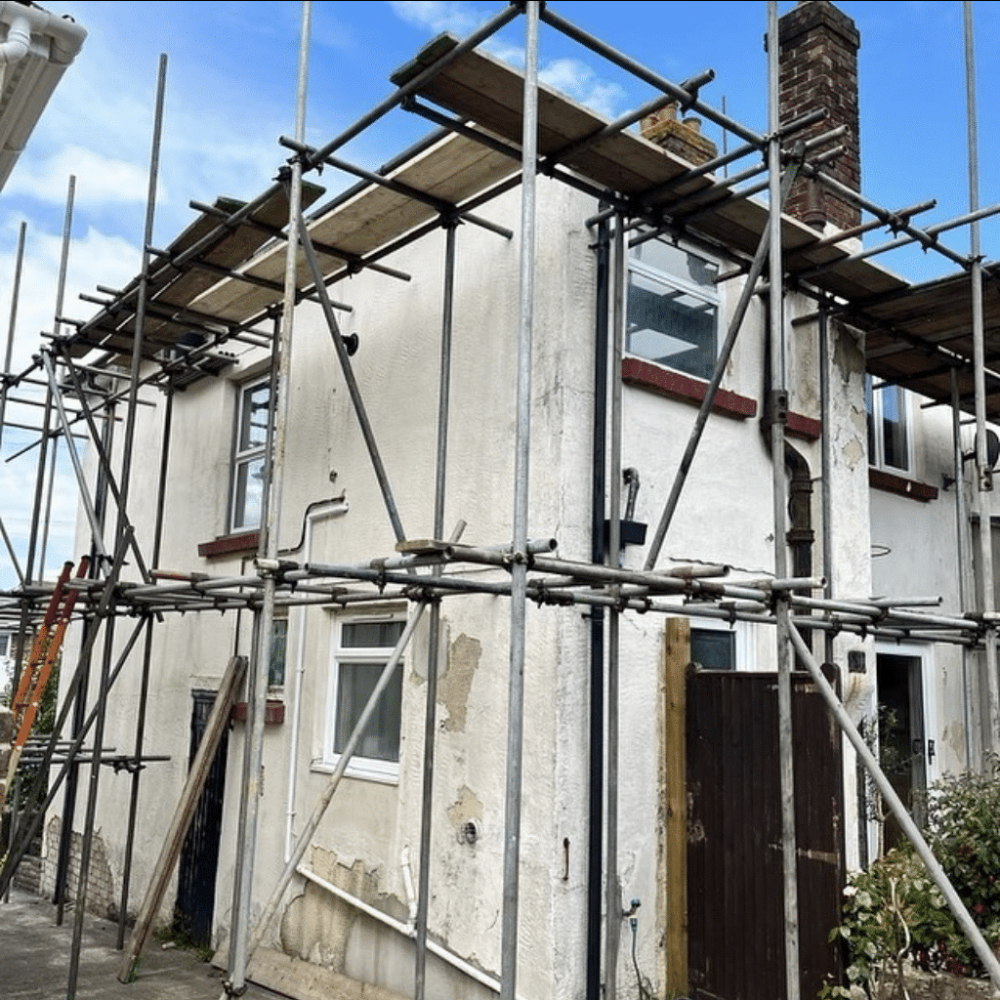
You might know this as a tin hat, a scaffold roof, or a temporary roof system. Whatever you call it, the job is the same: a weatherproof cover supported on scaffolding that sits above the building rather than resting on it, so work can continue underneath regardless of rain or wind.
How it works
2 Simple Steps

Use the button below to call us today for an instant response.

Fill out our contact form with information about your project and we will be in touch.
When You Need a Temporary Roof
Temporary roofing comes up in a specific set of situations, and recognising which one applies usually makes the decision straightforward.
- Full re-roofs, where the existing roof covering comes off and the building needs protecting until the new one is complete
- Storm or fire damage, where part of the roof is already compromised and water ingress is an immediate risk
- Extensions and loft conversions, where the roofline is being altered or opened up as part of the build
- Listed buildings and conservation projects, where roof works often take longer due to consents and specialist materials
- Winter works, where a planned re-roof needs to carry on through wetter months without delays
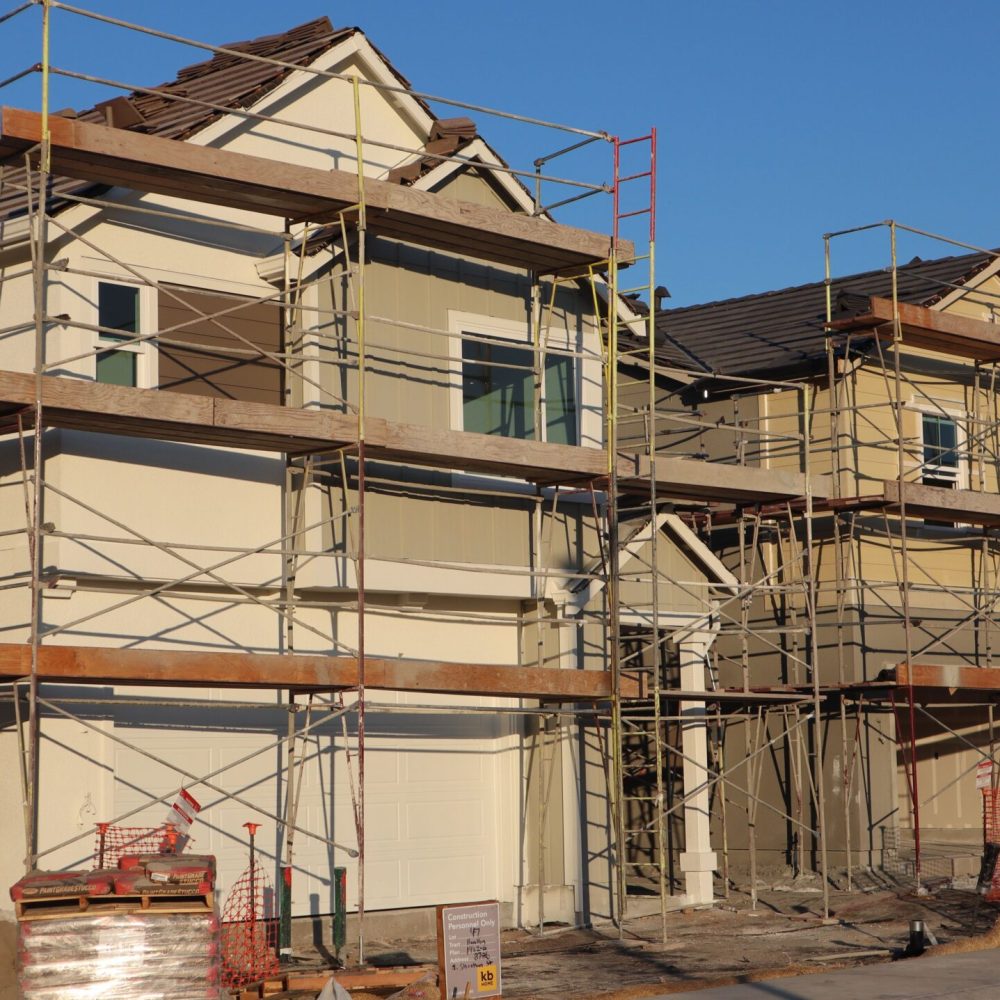

Temporary Roof Systems: Keder, Tin-Hat & Monopitch
There are a few different ways to build a temporary roof, and the right one depends on the building’s shape, the scaffold design and how long the roof needs to stay up.
- Keder roof systems use a flexible PVC sheet tensioned into aluminium track, giving a fully weatherproof cover that is quick to adapt as the job progresses
- Tin-hat systems use rigid sheeting fixed directly to a scaffold frame, a straightforward and robust option for straightforward re-roofs
- Monopitch systems slope to one side, useful on terraced or semi-detached properties where a ridge-style cover is not practical
Whichever system fits, the scaffold beneath has to be designed to carry the extra load and withstand wind, which is why temporary roofing is specialist scaffolding work rather than a standard installation.
Keeping Work Dry, Safe and on Programme
The point of a temporary roof is simple: the trades keep working regardless of the forecast, and the building and its contents stay protected. A well designed scaffold roof also has to account for wind loading, since a temporary structure sitting above an open roof is more exposed than a typical scaffold, and safe working platforms for roofers and other trades underneath.
We design each temporary roof around the building and the programme, not a one-size template, which is part of why access and loading get checked properly before anything goes up.
What Affects the Cost
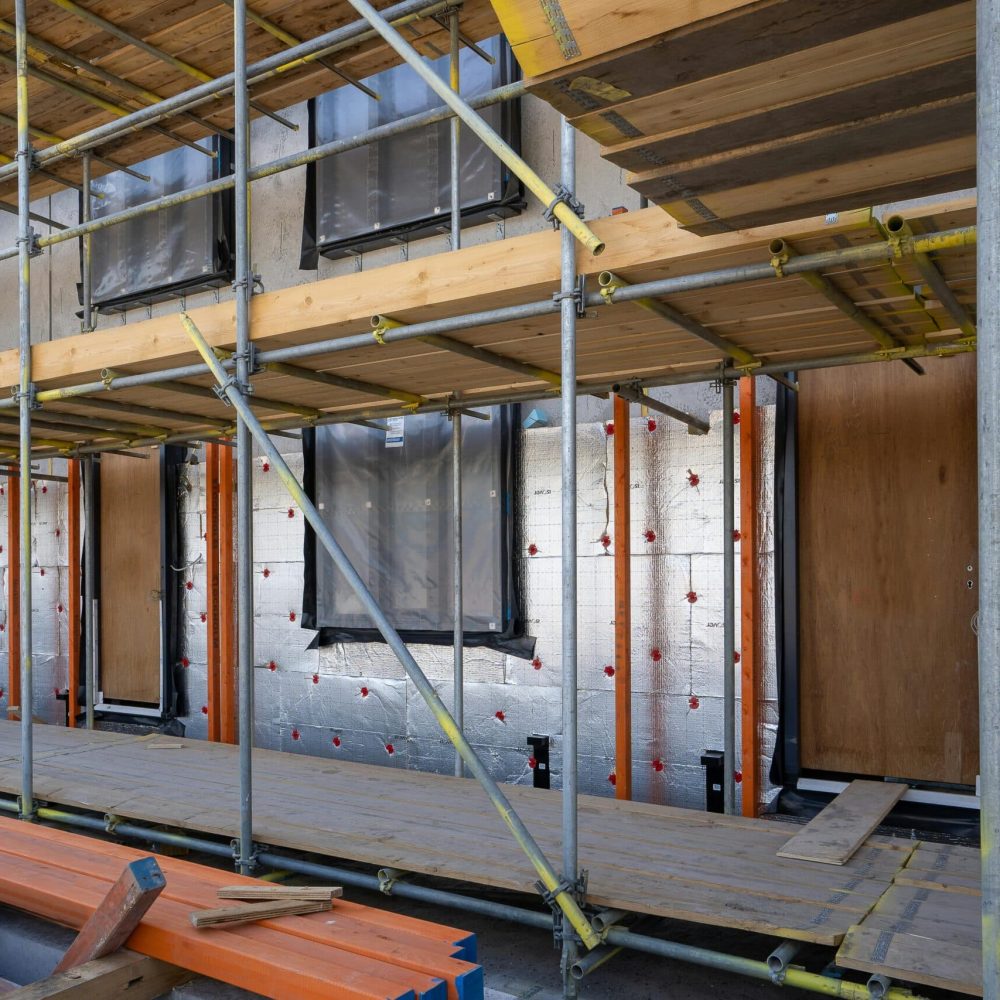
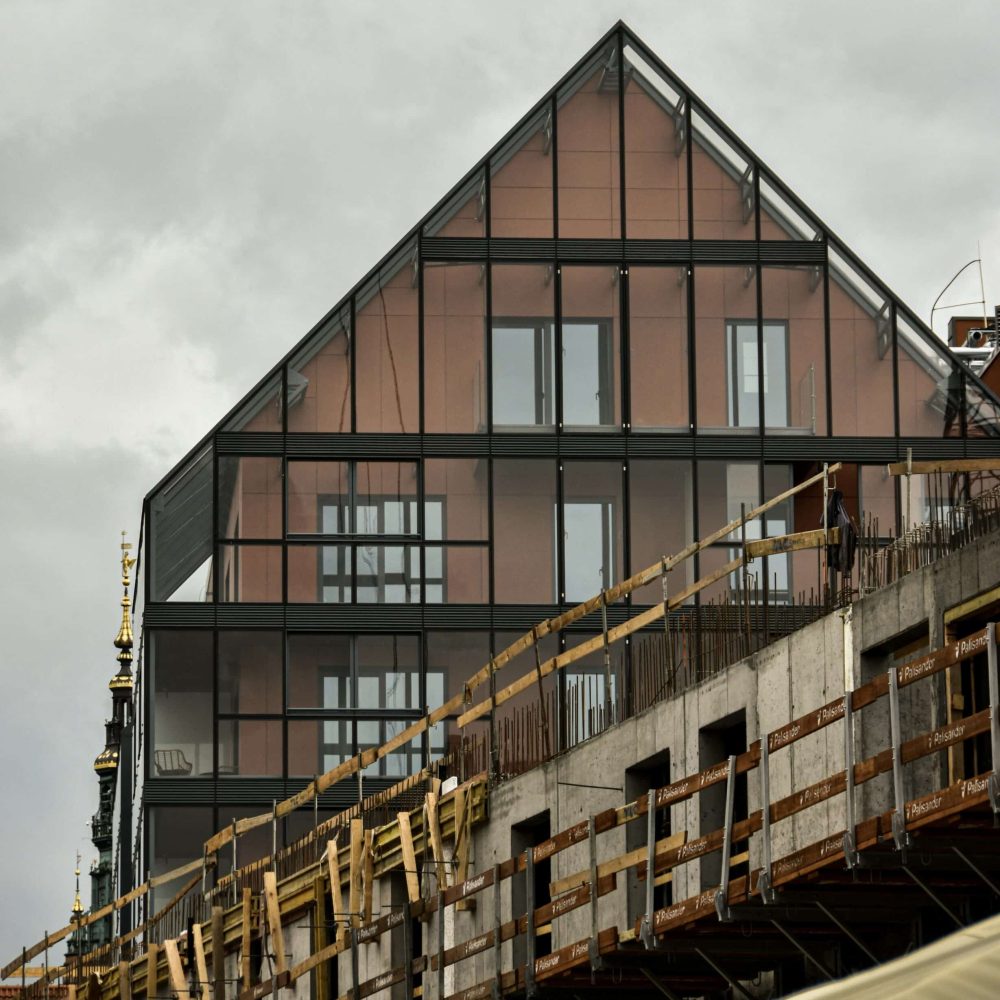
Temporary roofing costs depend on the size of the roof, the system used, and how long it needs to stay up. A straightforward tin-hat cover over a single roof slope costs less than a full keder system over a large or irregular roof shape. For a general sense of scaffolding costs and how weekly hire pricing works, see our scaffolding cost guide and our guide on how scaffolding is priced.
Areas We Cover
We install temporary roofing across Sussex and Kent, including Scaffolding Crawley where we already handle a steady flow of temporary roof enquiries, and Scaffolding Tunbridge Wells, along with the wider area covered by our Scaffolding Sussex pillar page.
Frequently Asked Questions
-
How long can a temporary roof stay up?
It depends entirely on the job. A straightforward re-roof might only need temporary cover for a week or two, while a larger project or one affected by weather delays can run for several weeks. We agree the likely timeframe with you before installation and keep you updated if it needs to change.
-
Is a temporary roof fully waterproof?
Yes, when correctly installed. Keder and tin-hat systems are both designed to be fully weatherproof, protecting the building and the work underneath from rain and, to a large extent, wind driven weather.
-
Do you offer temporary roofing after storm or fire damage?
Yes. Storm and fire damage are among the most common reasons people need temporary roofing at short notice. If the situation is urgent, call us and we can usually assess and quote quickly.
-
What is the difference between tin-hat and keder roofing?
A tin-hat system uses rigid sheeting fixed to the scaffold, while a keder system uses a tensioned PVC sheet in an aluminium track. Keder tends to suit larger or more complex roofs, while tin-hat is often simpler and quicker for smaller, straightforward jobs.
Get a Temporary Roofing Quote
Call us now on 07774 681967, book a free site visit, or use our contact form and we will confirm the right temporary roof system for your project and give you a clear quote.

Office 8A, Belmont Business Centre, Graywood Road, East Hoathly BN8 6QL
Covering all of East and West Sussex, plus parts of Kent